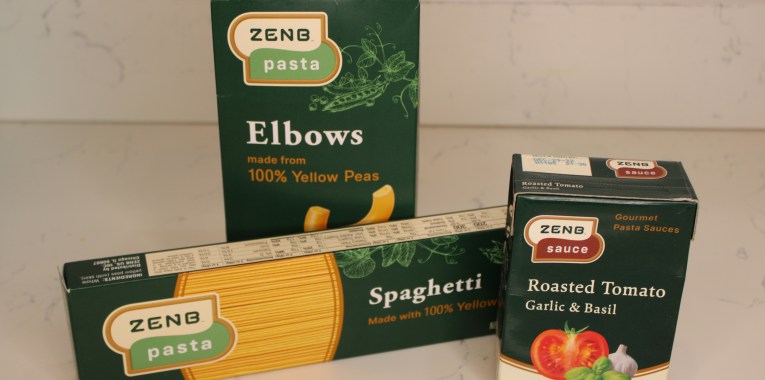
ZENB (ZEN-bee) is created from the Japanese expression, zenbu, meaning, whole.
I love pasta…so much that I am heading to Florence, Italy, in a few weeks for the purpose of eating great pasta. Unfortunately, I can’t often fly off to the beautiful country of Italy for some of the best pasta in the world, so I must find options here at home.
I am a big fan of carbs – something I wish wasn’t true – and pasta has plenty of them. I have tried gluten-free or plant-based pasta before, mainly because, for a while, my son needed to avoid gluten. Honestly, they were always disappointing. The texture and flavor were never right. Gluten-free pasta is sometimes gritty, flavorless, or has an odd flavor.
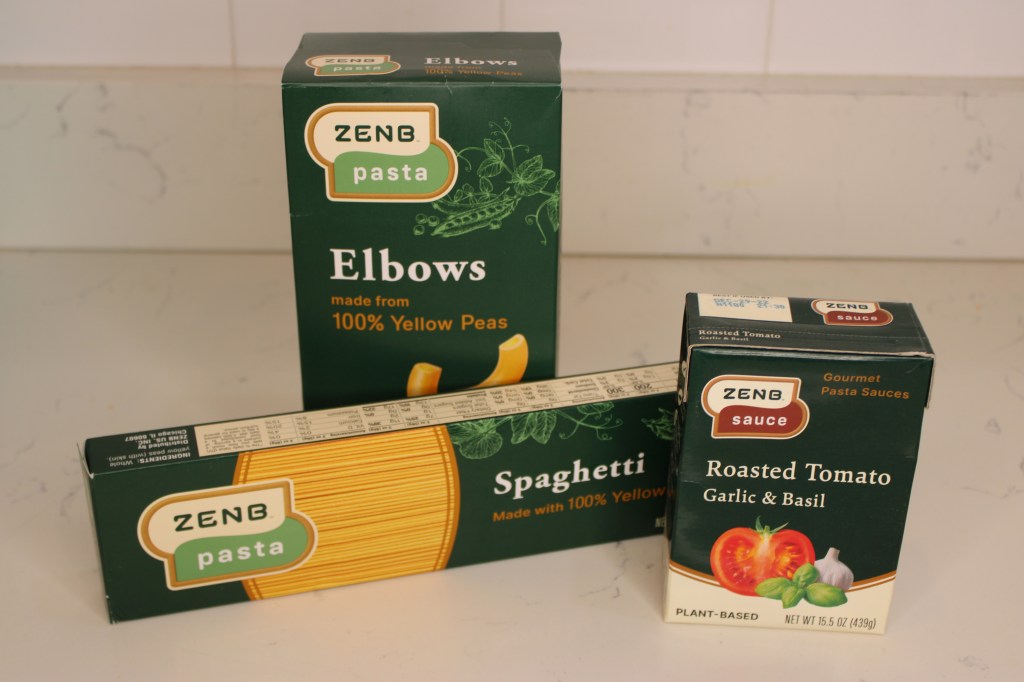
Recently, I received some pasta samples from ZENB, an innovative plant-based food company creating pasta made from yellow peas, skin and all. I never even heard of yellow peas so I was intrigued. And when I say yellow peas, that’s it. Their pasta is all made with just a single ingredient. This is revolutionary for people eating gluten-free or simply trying to eat healthier. ZENB pasta adds healthy fiber and protein to your diet.
On top of that, ZENB is proud to offer products that are gluten-free, dairy-free, non-GMO, vegan, and always free of artificial colors and flavors. So, onto the important stuff. What did I think of ZENB plant-based pasta? I thought it was fantastic. If I didn’t know it was plant-based I wouldn’t know it was plant-based.
Trying out some ZENB plant-based pasta
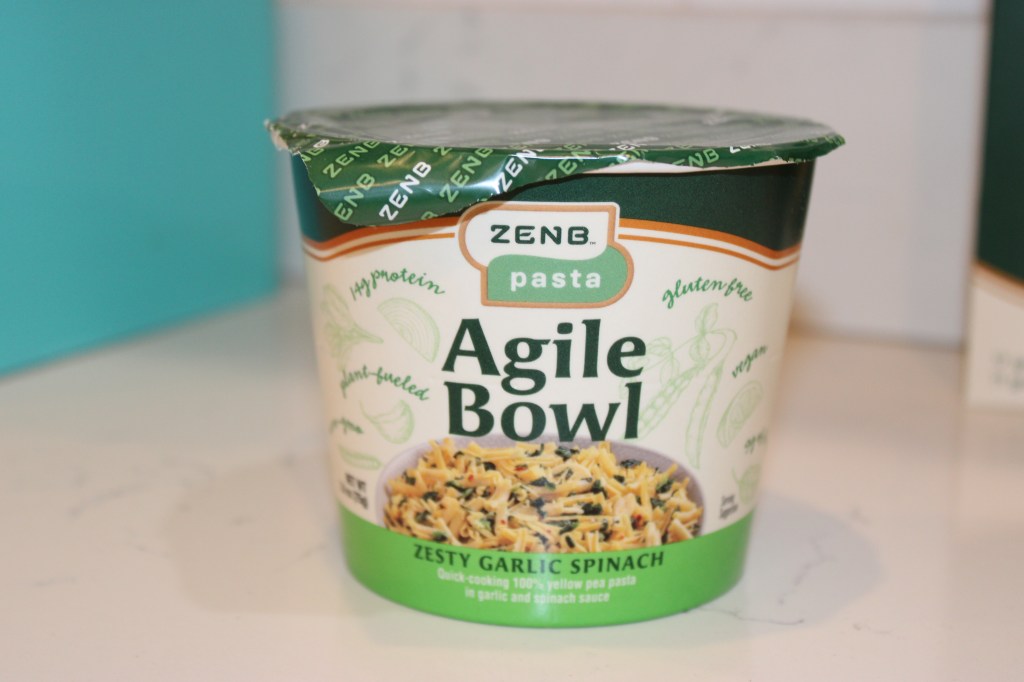
First, I tried one of their Agile bowls, Zesty Garlic Spinach. I’m not good at making healthy choices for myself. I tend to grab quick, sometimes unhealthy options because I am often in a hurry to get back to my computer. Let me tell you; the Agile bowl is life-changing for someone like me. All I added was a little water, as the directions say, and plopped it in the microwave. I was left with a yummy, healthy, and very quick lunch. The pasta was al dente, and the Agile bowl was full of fabulous flavor. I was ridiculously excited to have something I could make so quickly that didn’t taste as if I made it in two minutes.
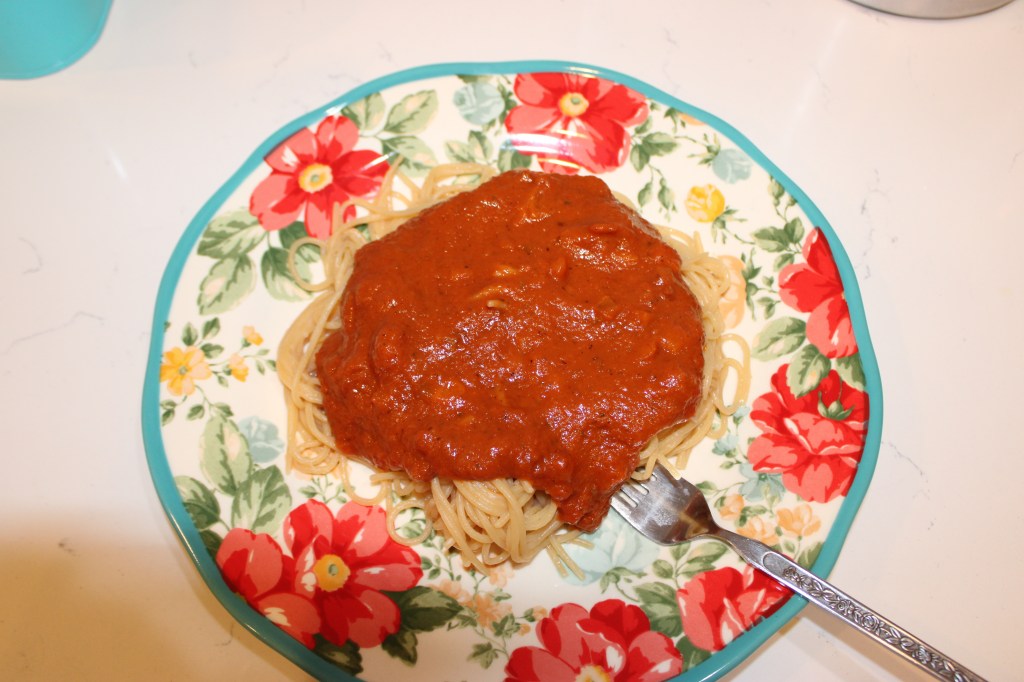
I also tried ZENB’s spaghetti topped with their Roasted Tomato Garlic & Basil sauce. I make homemade spaghetti sauce about once a week. I will happily substitute my homemade stuff with ZENBs when I am not in the mood to cook. Again, eating something fast and easy that actually tastes good brings me a silly amount of joy. Is that wrong?
In conclusion, ZENB is a great company. Plenty of food businesses turn out “healthy” options, but they forget to include great taste. I love that ZENB is expanding the idea of plant-based pasta while keeping the reality that people want to feel as though they are indulging when enjoying a meal. Healthy doesn’t have to be without taste. By the way, they also make Sweet Carrot Tomato sauce and a Creamy Mushroom, Cauliflower, & Garlic sauce. Sauces come in cardboard for easy recycling too. Check out some of their recipes here.
Check out this fabulous documentary called, “What Plants can do,” featuring Hunter Fieri (son of Guy Fieri of Triple D Nation) on ZENBs website, where they discuss the benefits of plant-based food and the importance of plant crops.
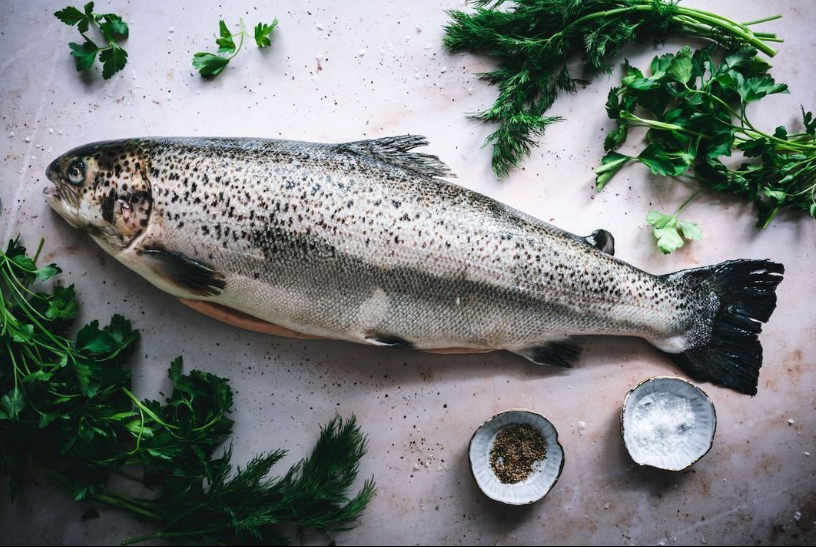
Today, I spoke with Max Francia of Bluehouse Salmon, an innovative company with a goal to bring you fresh, healthy, chemical-free salmon while also doing its part to collapse the carbon footprint. Whether you’ve long loved salmon or are new to the healthy meat choice, Bluehouse Salmon is one of the only unadulterated options.
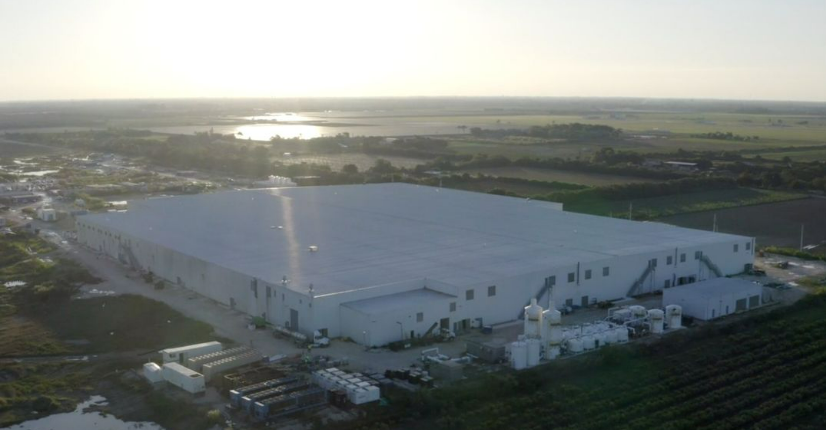
Bluehouse Salmon began with the vision of Johan Andreassen and Bjørn-Vegard Løvik, and co-founder Thue Holm. The first site of Bluehouse Salmon was in Denmark, where 25 generations of salmon were raised. Today, they are located in Homestead, Florida, where they raise 225,000 metric tons of salmon each year. To put that in perspective, it’s billions of sustainable salmon dinners every year.
The meaning behind the name
The name “Bluehouse” stems from the idea that the salmon raised isn’t farmed in the traditional sense, nor is it freely caught in the ocean. Bluehouse Salmon is raised on land, making it more of a greenhouse-type production, hence the name, Bluehouse. The process is fascinating, and I admittedly knew very little about it until now.
In traditional salmon farming, the fish live in cages or nets in the ocean water. This method isn’t good for the environment or for your health. According to Sentient Media, salmon farms release excessive amounts of feed, feces, and dead salmon into the ocean. Although all these things are normally found in ocean waters, they are dangerous in concentrated amounts, such as in a salmon farming area.
Unfortunately, because disease spreads easily and quickly in a salmon farm, antibiotics, pesticides, and other chemical treatments are used to try to prevent diseases and their spread. Since farmed salmon live in the ocean, if one or more escape, those diseases are spread to fish in their natural habitat. Even worse, antibiotics and other chemicals spread to our natural ocean waters, hurting the environment and any fish you may eat.
Bluehouse Salmon uses NO ANTIBIOTICS or chemicals in the treatment of their salmon. They are passionate about your health and the environment. The salmon are raised in tanks in a land-based Florida Bluehouse™, not in the ocean, so the water is constantly monitored. This means no disease for the salmon and no damage to the ocean. The secret to making Bluehouse work effectively and safely is its Recirculating Aquaculture Systems (RAS).
Within Bluehouse Salmon’s 36 tanks, which each contain 450,000 gallons of water, The RAS is continually purifying the water using a state-of-the-art filtration system, protecting the fish from bacteria and disease.
The water, which is over 95% saline and under 5% freshwater, recirculates every 30 minutes, filtering and injecting 1,000 gallons per hour. After ten days, the water is removed and added to the Boulder zone in Southeast Florida’s aquifer system. It remains there for thousands of years, gradually making its way back out into the ocean. Thanks to this controlled, clean environment, the salmon live a healthy life in tanks that are 5% fish and 95% water with controlled currents, allowing the fish to swim upstream just as they would in their natural habitat.
Land-based tanks that use filtered water prevent the fish from encountering common problems, such as sea lice and other wild fish diseases. This makes it possible for Bluehouse Salmon to avoid antibiotics and other chemicals.
Another common issue among ocean fish is microplastics. Unfortunately, the oceans are full of pollution, especially plastic. When plastics break down, they become microplastics that are easy for fish to ingest. It’s horrible for the ocean, the fish, and you. When eating salmon that has ingested microplastics, you’re eating microplastics as well. We all deserve salmon that is just salmon – no antibiotics, no chemicals, and no carcinogens.
US consumption of salmon
The United States consumes more salmon than any other country in the world. Sadly, 80% of all seafood eaten in the US is imported by air, leaving a significant carbon footprint behind. An essential goal of Bluehouse Salmon is to have the smallest carbon footprint possible. They do this by raising salmon on land in the United States, where it is then easily distributed throughout the country via truck rather than by air, which significantly cuts down on air emissions, time, cost, and fuel.
A healthy food choice
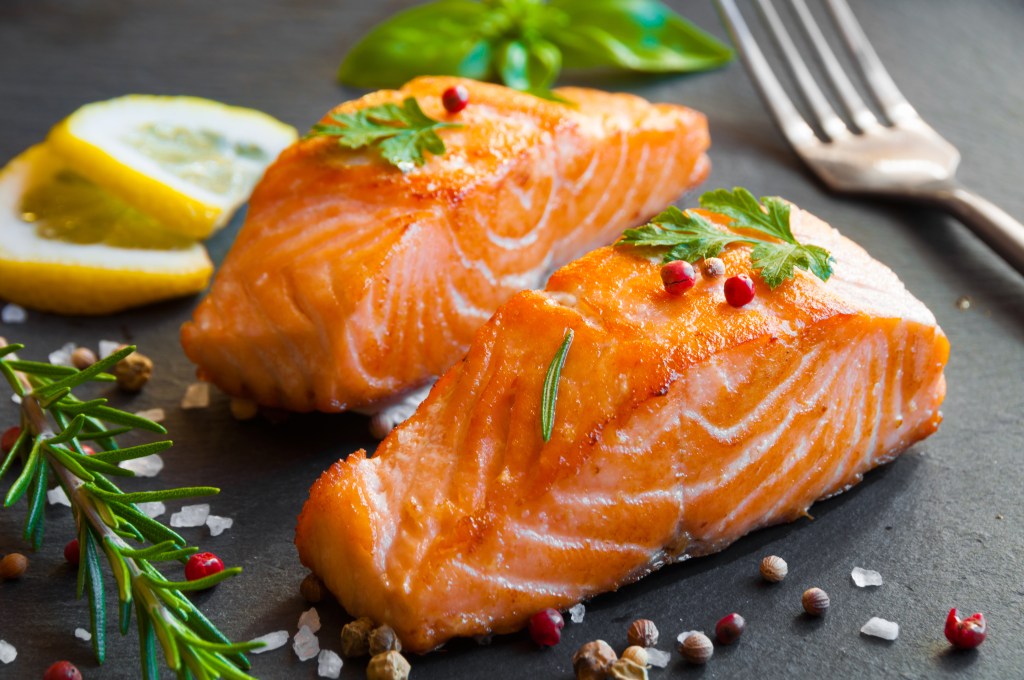
Image Credit: Shutterstock / Maria_Usp
It never hurts to eat healthier, and salmon makes healthy eating easier. It’s naturally high in Omega-3 fatty acids, which are necessary for heart health and lowered inflammation levels in the body. The American Heart Association recommends that we eat at least two servings of Omega-3 type fish every week. Salmon is also an immune system booster, containing vitamin D and vitamin B6.
Salmon is naturally healthy but can also be unhealthy when fed antibiotics, pesticides, microplastics, and other harmful chemicals. At Bluehouse Salmon, all of those dangers are avoided, and what’s left is pure, natural healthy salmon.
Bluehouse Salmon is known for its mild flavor, which makes it a great option when introducing someone or even yourself to salmon. It’s the perfect healthy meal choice for the entire family. Search for Bluehouse Salmon near you and start enjoying healthy, land-raised salmon from a company that cares about what’s on your plate.
Salmon recipes
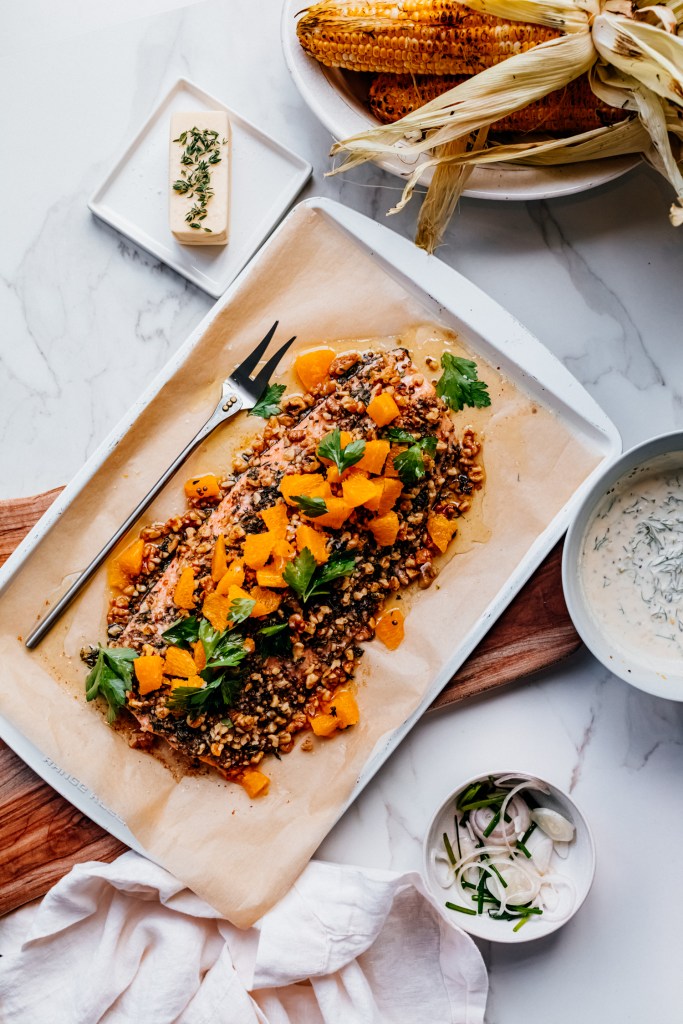
Roasted Filet of Salmon with Citrus and Toasted Walnuts
Ingredients
3 – 3 1⁄2 pound salmon filet, skin off, pine bones removed 1⁄4 cup olive oil blended 3 tablespoons coriander toasted 1⁄2 tablespoons kosher salt
1⁄2 tablespoon coarsely ground white pepper 3 tablespoons picked thyme, fresh 1⁄2 cup walnut pieces, crushed 1 cup orange segments
1⁄2 cup parsley leaves picked Flakey sea salt as desired Olive oil as desired
Instructions
Preheat the oven to 375 degrees f.
Line a medium sized baking tray with parchment paper. Brush the salmon generously with olive oil and season liberally with coriander, salt, white pepper and thyme. Finish with the crushed walnuts and drizzle with additional olive oil.
Bake in the oven for 18-22 minutes or 125 degrees f, turning at the halfway point to ensure that the crust develops evenly.
Remove the salmon from the oven and let it stand for 4-5 minutes prior to garnishing with the orange segments which should be spooned in a clean line down the center of the filet. Garnish with freshly picked parsley leaves, flakey sea salt and a drizzle of olive oil if desired.
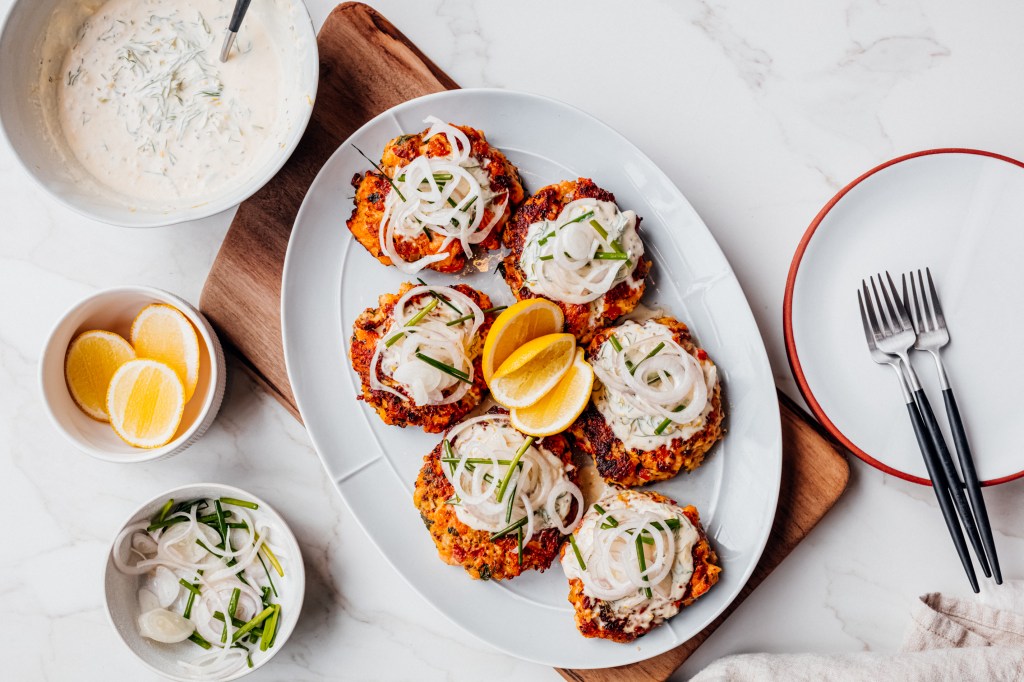
Seared Salmon Cakes with Lemon and Dill Cream
Prep Time: 20 minutes Cook Time: 10 minutes Recipe Yield: 10 ea (5oz) Recipe Serves: 10 as app or 5 as entree
Ingredients
Lemon Dill cream
1 1⁄2 cups creme fraiche 1⁄4 cup lemon juice fresh 3 tablespoons lemon zest 1⁄2 cup dill chopped 1⁄2 tablespoon kosher salt 2 teaspoons coarsely ground black pepper
Salmon Cakes
2 pounds fresh salmon, skin removed (canned may be substituted) 1⁄2 cup + 4 tablespoons olive oil 1 teaspoon white pepper, ground 1 teaspoon kosher salt
1 cup diced red onion 3⁄4 cup diced roasted red bell peppers
1 cup panko breadcrumbs 1 lemon, zested and juiced
Garnish
1⁄2 cup chives, cut into 1⁄4” stick 1⁄4 cup shallot sliced 6-8 lemon wedges
Instructions
1. Combine creme fraiche, lemon juice, lemon zest, dill, salt and pepper in a small bowl and mix until well incorporated. Keep chilled until serving.
2. Place the salmon, 1⁄2 cup olive oil, salt and white pepper in a food processor. Pulse until only bite sized pieces remain. Transfer to a medium mixing bowl.
3. Gently fold the remaining ingredients into the salmon mixture, mixing thoroughly with your hands. Do not break apart the large pieces while mixing as these will provide excellent texture.
4. Form 6 patties 5 ounces each (approx 2⁄3 cup). Place the patties on a large plate.
5. Preheat the oven to 425 degrees f.
6. In a large non-stick skillet, heat the remaining 4 tablespoons of olive oil over medium-high heat. When hot,
7. place the patties in the pan. Cook for 2 minutes on a single side and transfer them to the oven for 4-5
8. minutes. Remove from the oven and flip the salmon cakes over. Let sear for an additional 1-2 minutes.
9. Transfer the cooked patties to a paper towel to drain any excess olive oil.
10. Transfer the cakes to a plate or platter and top each cake with a generous dollop of lemon dill cream.
11. In a small bowl mix together the chives and slices shallot and garnish each cake with a small herb and onion salad and serve with lemon wedges.